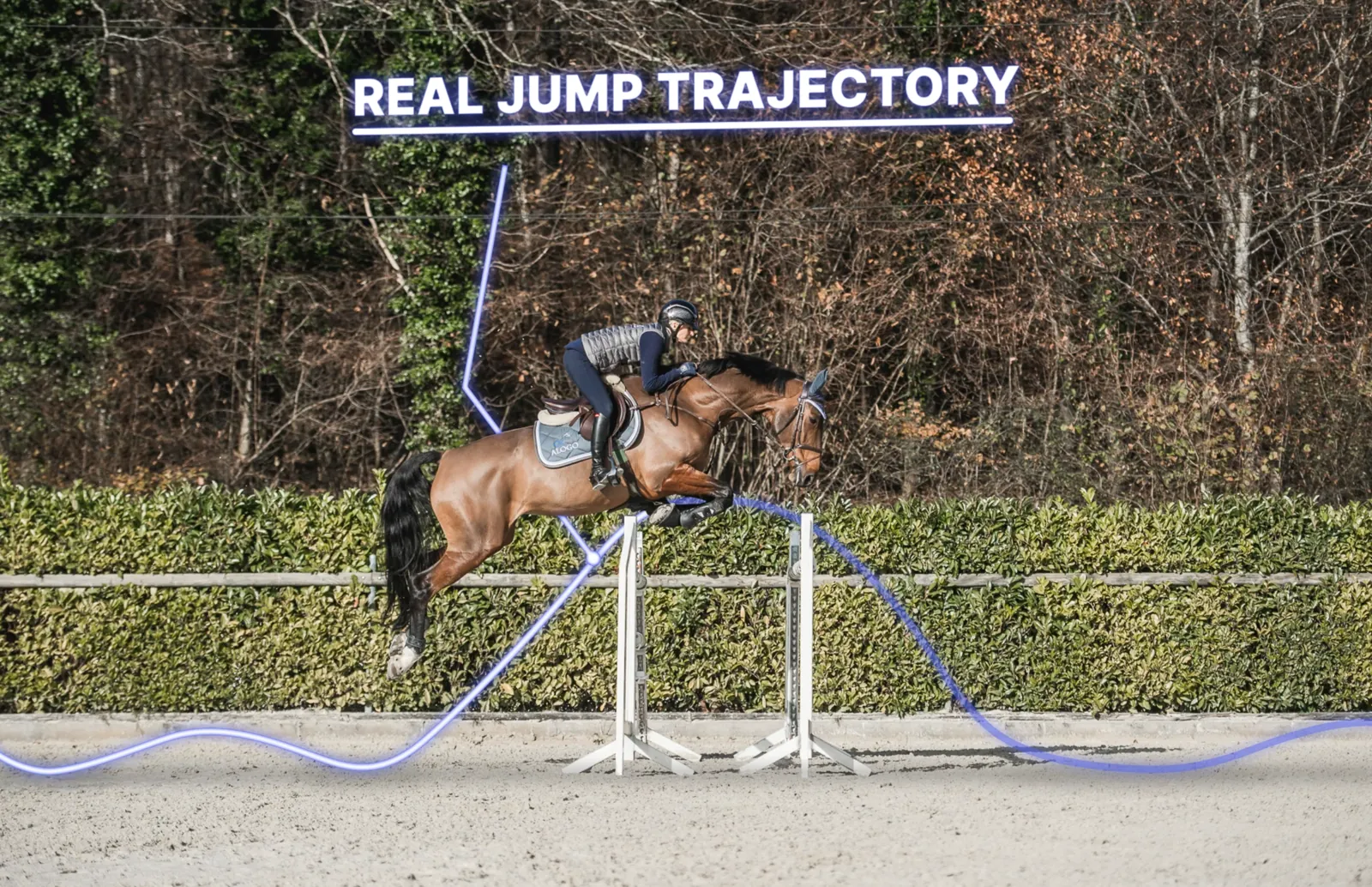
Training
Horse balance: roll, pitch and straightness explained
Lateral balance, longitudinal balance and straightness: what Alogo Move Pro measures, how to read the data and how to use it in training and at shows.
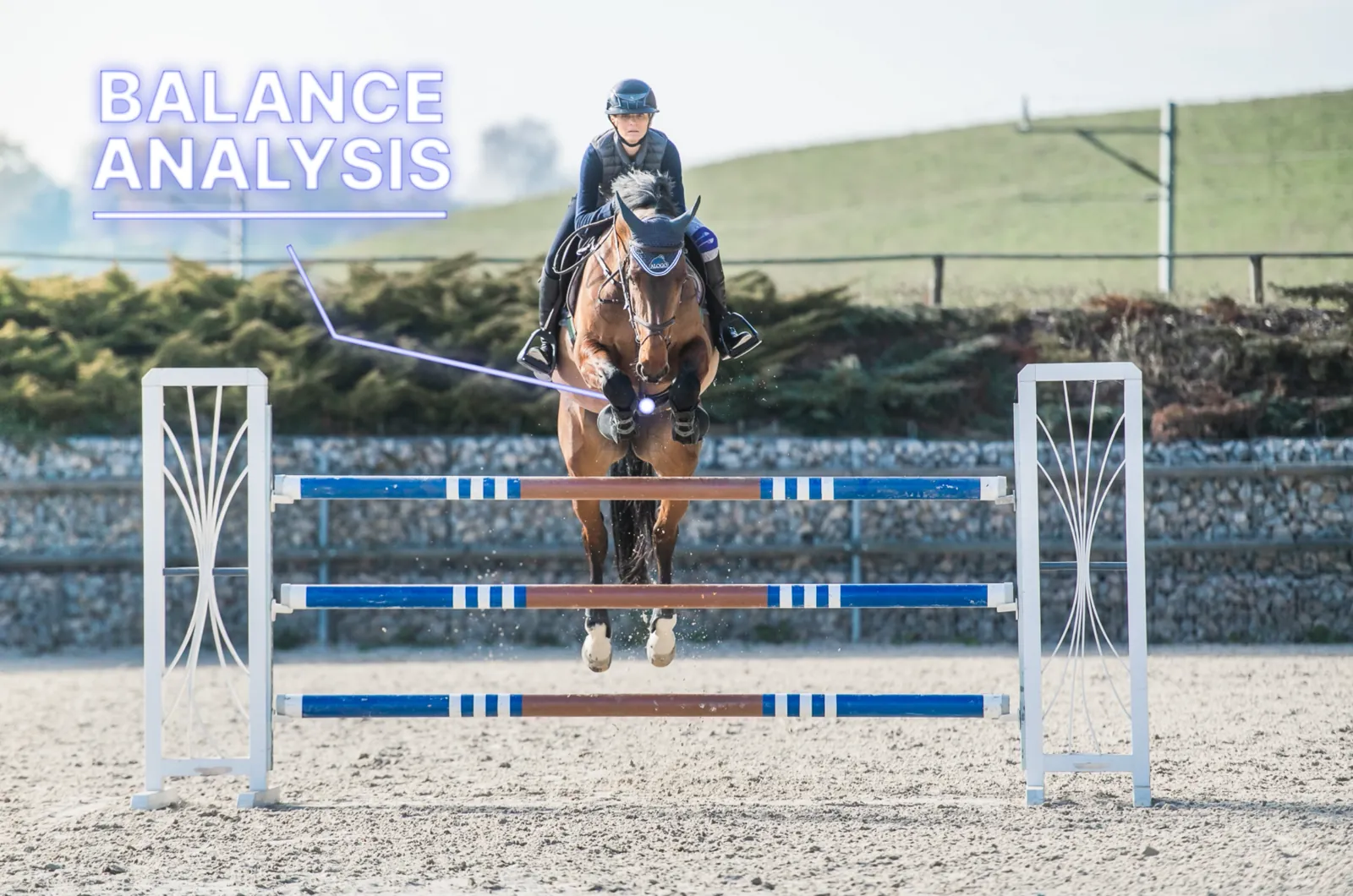
A horse's balance is measured through several parameters. Alogo Move Pro tracks three of them, at every stride and every jump: lateral balance, straightness and longitudinal balance. Here is how to read them.
Lateral balance (roll)
The aim is to assess the imbalance between right and left, and to answer the question: "does my horse lean more to one side than the other as it moves?". You want values as close to zero as possible. That means you are centred on your horse and it works in the same way on the right rein and on the left rein.
A lateral imbalance asks more effort of the horse, especially in tight turns on the side where it tends to lean: it has to put more energy into its movement to compensate and clear the fences without a fault.
Straightness (yaw)
Straightness describes how straight the horse is as it moves: a straight horse moves with its hips in line with its shoulders. Positive values mean your horse drifts to the right, negative values to the left.
On a straight line, values that move away from zero often reflect an asymmetry in the rider's aids, or stiffness linked to a lack of work or to the horse's age. Sometimes they point to a deeper biomechanical issue: a horse that drifts on its own may be compensating on one side. If it happens again from one session to the next, talk to your vet.
In lateral work in dressage, it is normal for straightness to vary. In a left shoulder-in, for example, values will be more negative than usual, since the horse brings its left shoulder in while the rest of its body stays straight: the more negative the values, the more marked the shoulder-in.
Longitudinal balance (pitch)
This is the difference in balance between the forehand and the hindquarters at each stride: "is my horse more on its shoulders or on its hindquarters in its gaits?". Positive values show a balance towards the back, negative values a balance towards the front.
A value of zero means neutral balance, often rather flat. Ideally, longitudinal balance is slightly above zero: the horse is then working well from behind. Most horses are naturally on their shoulders, and that is what riders work to correct. With Move Pro, you can measure that progress in concrete terms.
Did you know? The sensor is precise enough for the rider's balance to show in the horse's. A rider leaning to one side in the saddle shows up in lateral balance, a rider sitting too far forward or back shows up in longitudinal balance. On the same horse, it is therefore worth comparing the data from one rider to another: trainer, owner, sharer.
In short: what balance data is for
- spotting a horse's weaknesses and noticing unusual values early, especially in straightness and lateral balance, so you can discuss them with your vet or therapist;
- improving the rider's balance so it does not disturb the horse's;
- working on the "weak" side of some horses to perform in competition: tight turns in a jump-off, movements ridden on both reins in dressage;
- following the progress in longitudinal balance that comes with training, especially in young horses;
- measuring the precise effect of a bit or a training aid on longitudinal balance and straightness;
- combining balance with strides and jumps to find the best settings.
In the Alogo app, lateral and fore-aft balance can be compared at walk, trot and canter, session after session. To find out more, see Alogo Performance.
First published in 2021 on our former blog, this article has been updated. Some screenshots show an earlier version of the Alogo app.