Science
AAEP wearable sensor study: racehorse injury explained
The AAEP wearable sensor study in racehorses: how it was run, what it shows about musculoskeletal injury and what it does not say.
The AAEP wearable sensor study asked a simple question: can a sensor worn in training help identify the racehorses at risk of a musculoskeletal problem? Its answer, published in April 2026, is cautious but encouraging. Horses flagged yellow or red by the sensors were around twice as likely as the others to develop a problem, and the veterinary association considers that the technology still needs refining.
What is the AAEP wearable sensor study?
The AAEP (American Association of Equine Practitioners) is the leading association of equine veterinarians in the United States. In 2025 it launched the "Racehorse Wearable Biometric Sensor Research Project", a research project on biometric sensors worn by racehorses.
The aim: to check in the field, over a training season, whether these sensors provide useful information about a young Thoroughbred's physical condition before it is injured. The study did not set out to pick a winner among manufacturers, but to assess the approach as a whole.
How was the study run?
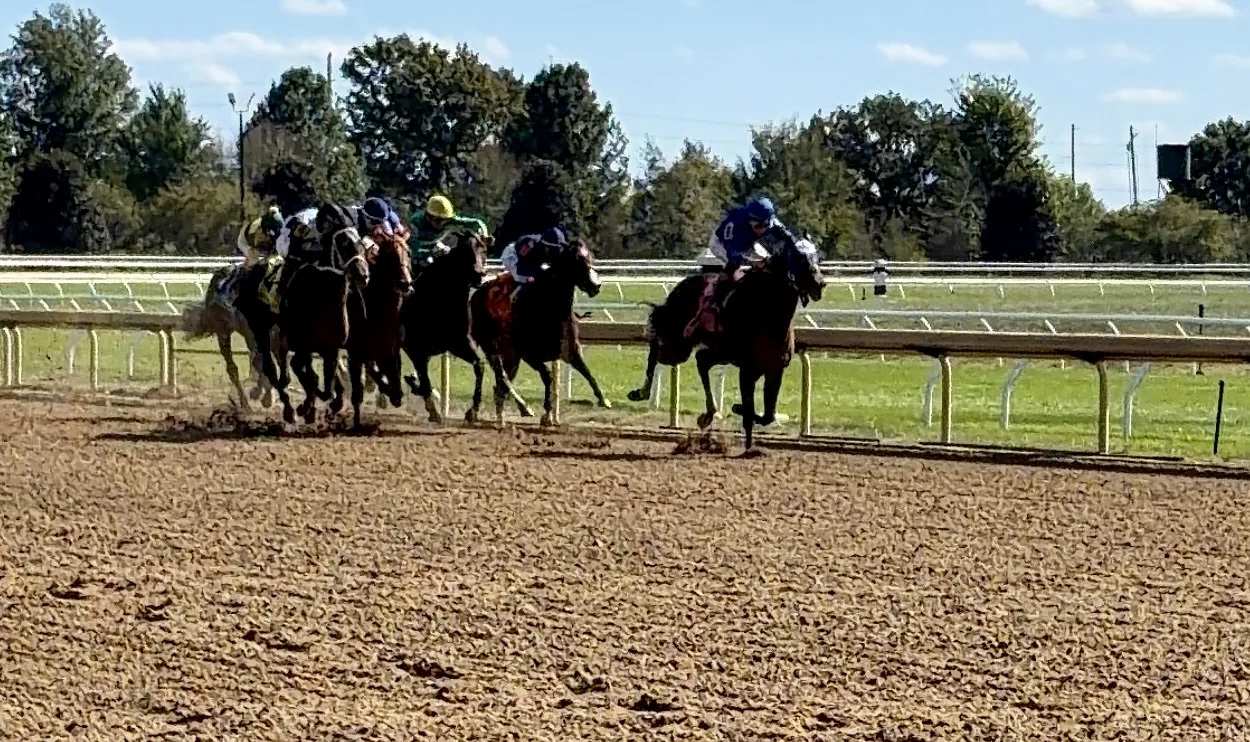
Six sensor companies were selected. Each had to recruit at least 100 two-year-old Thoroughbreds in training in the United States. In total, more than 700 horses wore a sensor during their high-speed works, or "breezes".
When the study began, in May 2025, Lexington TV station WKYT ran a report on it.
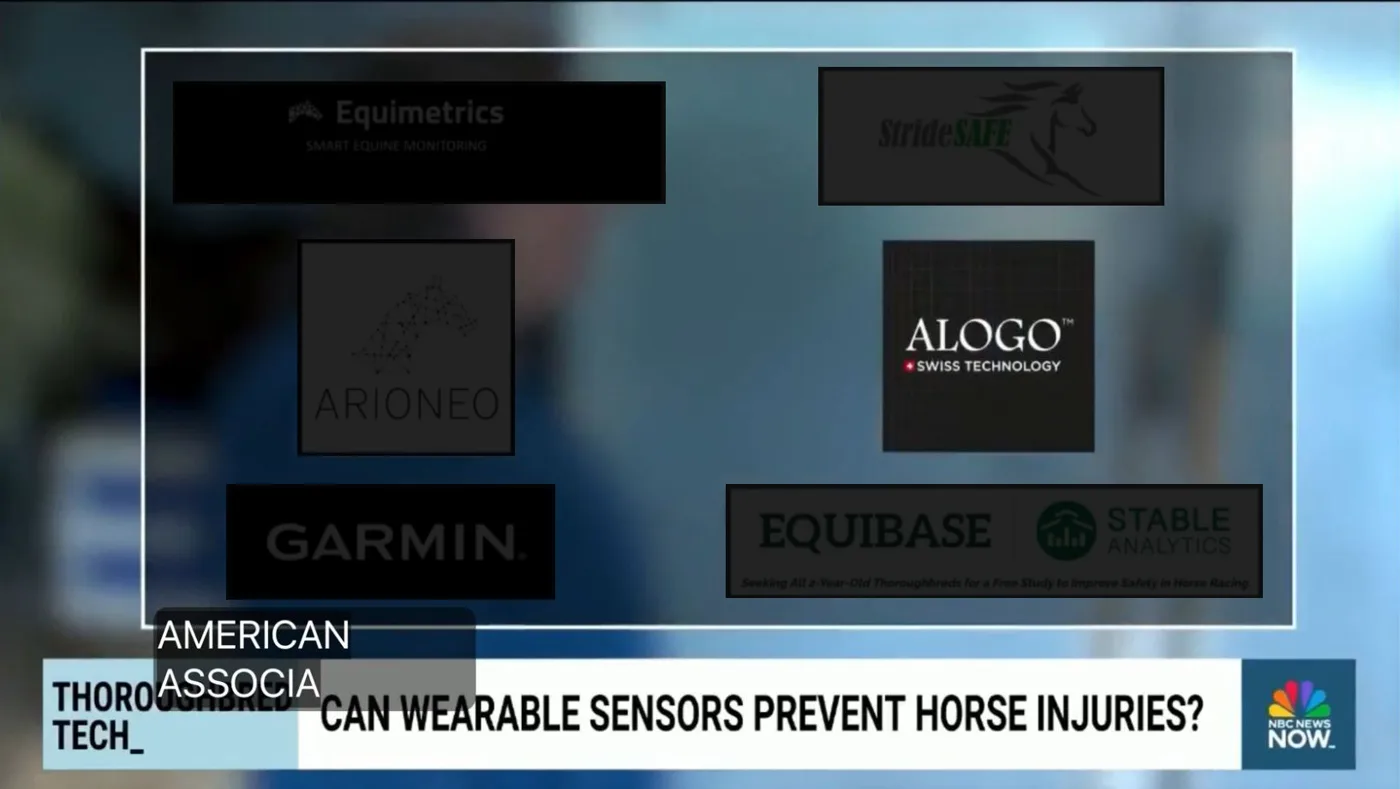
By the end of the programme, four companies had submitted enough data to be included in the final analysis: Alogo, Arioneo, StableAnalytics and StrideSafe (in alphabetical order). The analysis was entrusted to an independent team led by Dr Peta Hitchens of the University of Melbourne.
What do the green, yellow and red flags mean?
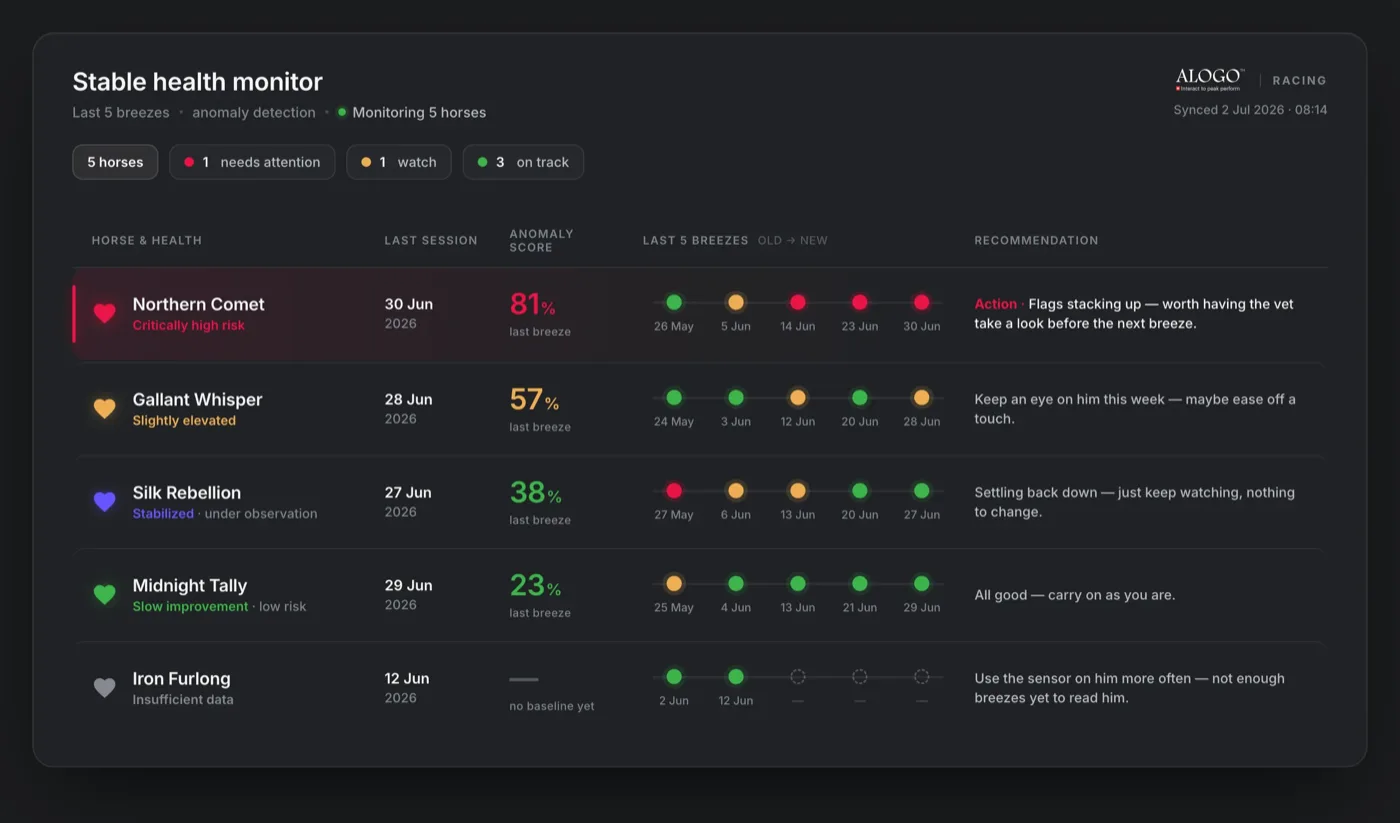
After each breeze, each manufacturer's system placed the horse in one of three levels: green when everything looked normal, yellow or red when its locomotion departed from what was expected. Participants, for their part, reported the musculoskeletal problems they observed: 221 over the programme, of which 142 involved bone and 79 soft tissue (tendons, ligaments, muscles).
What do the results show?
The main result fits in one sentence: horses flagged yellow or red at their last breeze, as well as those that had accumulated red flags over the previous 90 days, were around twice as likely to develop a musculoskeletal problem as horses that stayed green.
In other words, the sensor signals pointed in the right direction: they were more frequent in horses that went on to be injured. The AAEP also notes that wearing the sensors did not appear to interfere with training.
Did you know? The study looks at two things: the signal from the last breeze, and signals building up over three months. A single flag can have a thousand explanations; a trend that repeats from one session to the next deserves more of the trainer's and the vet's attention.
These results apply to the programme as a whole, across all the sensors analysed. They say nothing about the performance of any individual manufacturer.
What the study does not say
The AAEP was careful to set the limits of its own work.
- Not yet a mandatory tool. For the association, the sensors "show promise" and can serve as an effective complement to veterinarian and trainer oversight, but they "require further refinement before becoming a mandated device" in Thoroughbred racing.
- Not a tool to scratch a horse on race day. Dr Sara Langsam, chair of the AAEP Racing Committee, made the point: the study "was not intended to validate the use of sensors as a tool to scratch horses from competition on race day", but to check whether they provide more information about a horse's physical condition before it is entered to race.
- No ranking. Being included in the final analysis is neither an endorsement nor a ranking. The AAEP published no results by company.
- More studies are needed. The association calls for further prospective research and better data collection to refine the sensitivity and specificity of each sensor, that is, its ability to flag real problems without raising false alarms.
For Alogo, the detailed analysis of its own data from the project is being prepared for peer-reviewed publication. Until it is out, no Alogo-specific figure can be quoted.
Why this study matters, even away from the racetrack
Musculoskeletal injuries are a major concern in racing. A veterinary association organising a field evaluation, with several manufacturers and an independent analysis, is an important step: the debate on sensors moves away from marketing promises and towards data.
The principle being tested is not unique to racing. A show jumper or an eventer can also change the way it moves before the rider feels it. A sensor that measures locomotion at every session, in training as at shows, helps you notice that change earlier and talk to your vet at the right time. It does not deliver a verdict; it gives one more reference point to the people who know the horse.
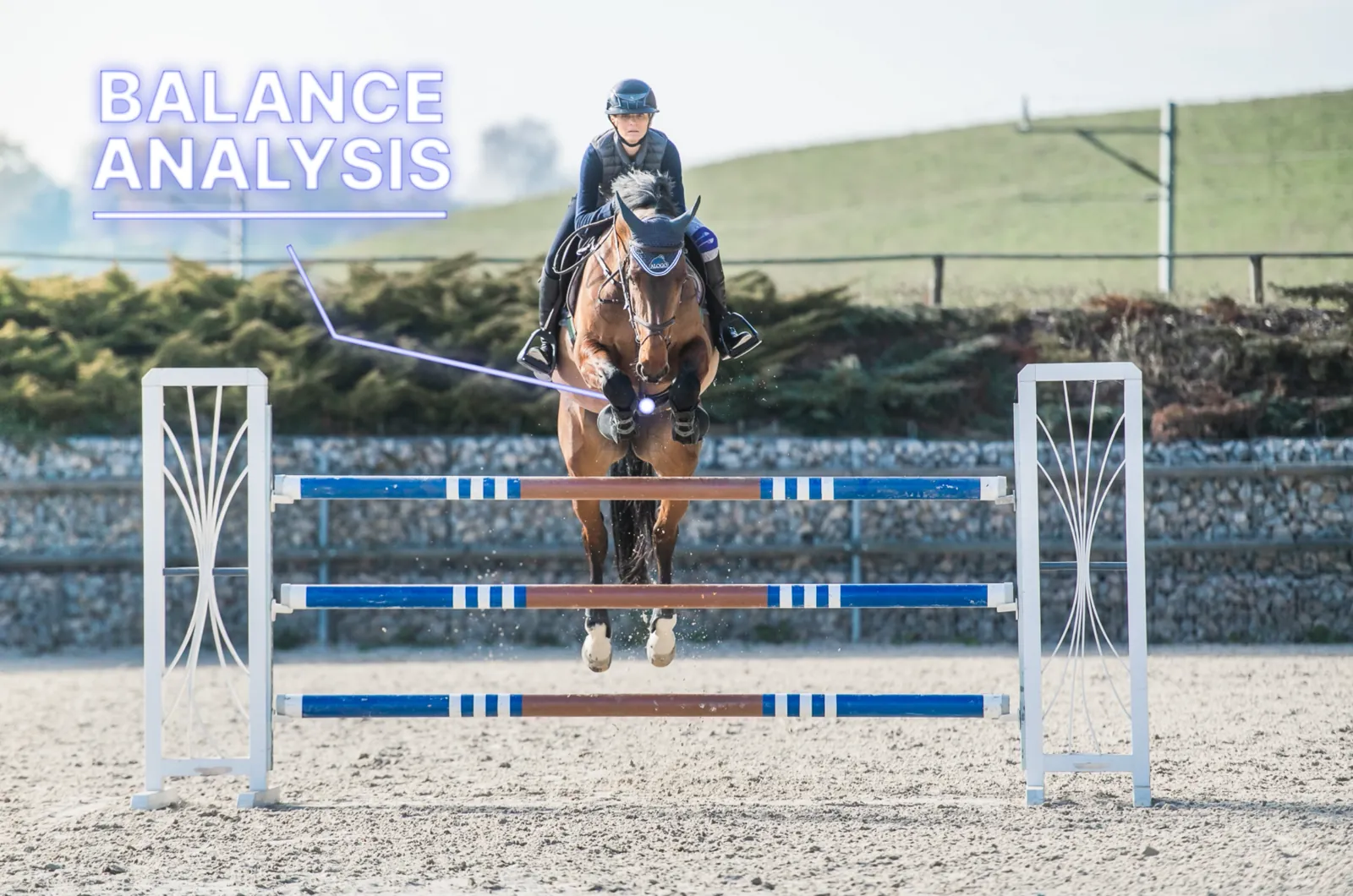
The Alogo Move Pro sensor has also been validated against the Qualisys motion capture system for gaits and jumping (Guyard et al., Sensors, 2023). That is the basis for following a horse's strides session after session, and seeing when they change.
Further reading
- The source: the AAEP press release (April 2026).
- Monitoring racehorses with Alogo: Alogo Racing.
- Monitoring the locomotor health of sport horses: Alogo Health.
- What a horse's strides tell you: stride length and height.
- All the scientific publications on Alogo: Resources.